Continúa la demanda por mesotelioma presentada por una mujer contra el fabricante de talco de J&J.

When Lita Goldstein was diagnosed with malignant mesothelioma, she quickly realized that the only possible place she could have been exposed to asbestos was in the Johnson & Johnson talc products she’d used throughout her life. She filed suit against dozens of companies associated with the iconic consumer product, and one of them, a talc manufacturer Kolmar Laboratories, filed a motion for summary judgment, asking for the case against them to be dismissed.
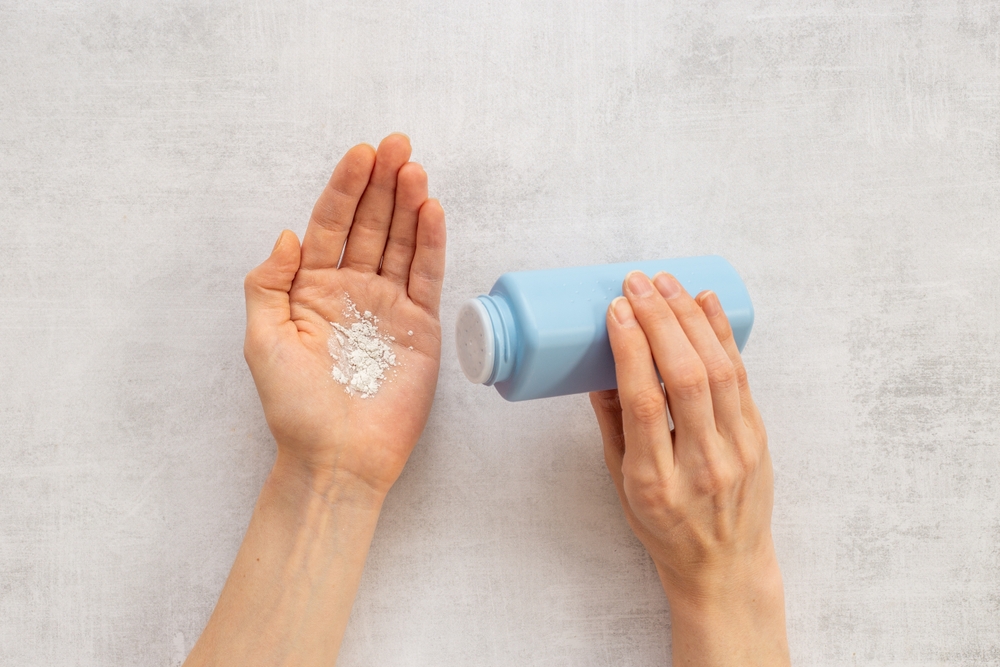
Talc Manufacturer’s Justification for Removal from Mesothelioma Claim Rejected
Kolmar Laboratories offered two different theories for why it shouldn’t have to defend itself against Ms. Goldstein’s mesothelioma claim. The first was that the victim had failed to offer proof that she’d been exposed to any talc product that they’d manufactured. The second was that despite having previously confirmed its manufacturing role in the product, as well as its active role in manufacturing the talc for Johnson & Johnson, they were simply following the company’s orders and should not be held liable for the outcome.
In response to these arguments, Justice Adam Silvera of the Supreme Court of New York County denied the motion. He explained that in order for a defendant to be dismissed from a reclamación de mesotelioma, they needed to prove that there was no way that their product could have been responsible for the plaintiff’s illness. Because the company had focused on what they viewed as shortcomings in the plaintiff’s claim, they fell short of that requirement.
Judge Denies Defendant’s Contractor Defense in Mesothelioma Claim
As to the other argument offered by the mesothelioma defendant, Justice Silvera largely ignored the company’s “contractor’ defense that it was only following Johnson & Johnson’s orders and specifications. His ruling against their motion for summary judgment means that the case will move forward in New York’s court system for a jury to hear unless Kolmar and the plaintiff agree to a settlement beforehand.
This ruling underscores a broader trend in talc-related mesotelioma litigation: courts are increasingly unwilling to dismiss claims simply because exposure occurred through everyday consumer use rather than an industrial workplace. Judges have recognized that manufacturers involved in producing asbestos-contaminated talc can still be held accountable, even when they operated within another company’s specifications. For victims, this decision reinforces that long-term personal use of talc products, supported by credible testimony and corporate records, may be sufficient to keep a claim alive and allow a jury to determine responsibility.
Aviso legal
La información proporcionada tiene fines educativos e informativos únicamente. La información de este sitio web no constituye asesoramiento legal y no debe utilizarse como sustituto de la consulta con un abogado colegiado. Las leyes y los resultados legales pueden variar según la jurisdicción, y solo un abogado cualificado puede ofrecerle orientación adaptada a su situación.
Los litigios relacionados con el talco cosmético tienen su propio cronograma y sus propios demandados; litigios relacionados con el talco y los polvos de bebé Explica ambos. Lectura adicional: Actualizaciones sobre talco para bebés y talco cosmético.

Autor: Abogado de mesotelioma Paul Danziger
Paul Danziger es un destacado defensor de las víctimas de mesotelioma en todo el país. Como cofundador de Danziger & De Llano, él y su equipo han recuperado más de 1.000 millones de dólares para sus clientes y han ayudado a miles de víctimas del asbesto y a sus familias.


Paquete de compensación financiera GRATUITO
- Información sobre despachos de abogados que recuperarán su INDEMNIZACIÓN MÁS ALTA
- Aprenda cómo cobrar en 90 días
- Solicite su parte de $30 mil millones en fondos fiduciarios